
Introduction
Between shifting work volumes, customers expanding into new markets, and changing coverage needs, service demand rarely stays constant. That can make capacity difficult to plan. Staff for peak demand, and you risk carrying excess capacity when volume falls. Staff for average demand, and you may struggle to respond when work increases or moves beyond your existing coverage. On-demand labor provides another option.
Used alongside employees and third parties, on-demand labor can provide dynamic workforce capacity for recurring break/fix, multi-site projects, A/V work, longer-term engagements, geographic expansion, surge coverage, and other field service needs. But getting more value from on-demand labor requires giving it a defined role within your broader labor strategy and supporting it with clear standards for the work, technician requirements, workflows, and desired outcomes.
Fujitsu North America took this approach when seasonal peaks and valleys made field service capacity difficult to balance. Rather than staffing its employee workforce to peak demand year-round, Fujitsu used on-demand technicians through the Field Nation platform to add capacity for project work while keeping employees focused on emergency and high-priority demand. The company reported 15% savings per work order and improved SLA compliance, and later expanded its use of the model to its Technical Courier service.
The Field Nation platform helps companies put this kind of strategy into practice. It connects access to a nationwide labor marketplace with program rules, work coordination, automation, and performance intelligence to help turn field service standards into repeatable operations. This guide walks through three phases for building that foundation.
Phase 1: Set the strategy
Before deciding how an on-demand labor program should operate, decide what you need it to accomplish and where it belongs in your broader labor strategy.
Start with the outcome
Start with the business or service challenge, not the labor model. Consider where your organization needs to:
- Expand geographic coverage.
- Respond to seasonal or project-based spikes.
- Improve response times.
- Protect margins.
- Reduce technician travel.
- Add capacity without adding fixed headcount.
Identify the outcome first. Then determine how you’ll measure it. Depending on the program, that could mean looking at response, fulfillment, quality, cost, coverage, or a combination of measures.
You don’t have to address every field service need at once. A clearly defined initial opportunity gives the program a purpose and creates a baseline for evaluating what works.
Questions to consider
- ?What outcome are we trying to improve?
- ?Where are our current labor models creating constraints?
- ?What will tell us the program is working?
Give on-demand labor a defined role
No single labor model is right for every type of field service work. Employees can provide base capacity for stable, predictable demand, strategic accounts, deeply integrated work, and lead technician roles. Third parties can extend capabilities when specialized expertise, complex project coordination, or turnkey delivery is needed.
On-demand labor plays a different role: dynamic workforce capacity. It can help organizations respond when work fluctuates, spans many locations, or can be delivered through repeatable standards and processes.
The objective isn’t to replace one labor model with another. It’s to determine where each model best supports the work you need to deliver.
 Employees
 Third parties
 On-demand labor
The economics should be part of the decision, too. Consider what meeting additional demand would require without on-demand labor. Would you need to hire more employees, increase technician travel, or rely more heavily on third parties?
On-demand labor can help align labor capacity more closely with the amount and location of work. But it isn’t the right fit for everything. Work requiring constant on-site management may be better suited to employees or third parties, while organizations looking for fully outsourced execution may need a different model.

The key is to give on-demand labor a deliberate role rather than treating it as the option of last resort.
Get the right people aligned
A strong use case isn’t enough if the people responsible for putting it into practice aren’t aligned. Start with a clear internal owner. That person should understand the desired outcome, initial use case, role of on-demand labor, and standards the program needs to uphold.
Then ask two questions:
Who must say yes?
Identify the leaders and teams whose support is needed for the program to succeed, such as service leadership, operations, and an executive sponsor.
Whose requirements must be addressed early?
Bring in functions that can influence or block adoption early enough to address their requirements. Depending on your organization, that could include procurement, legal, HR, finance, security or risk, and IT.
Don’t build the program around a single champion. Alignment across the people who will operate, support, and approve the model creates a stronger foundation for adoption.
Phase 2: Design the program
Once the role of on-demand labor is clear, translate the strategy into standards and rules that can be applied consistently as work moves through the program.
Define the work and your standards
Once you know where on-demand labor fits, get specific about the work you plan to run through the program. Define the types of work, expected volume, locations, service levels, timelines, and pricing or margin requirements. Then establish what successful execution looks like, including scope, documentation, proof of work, completion criteria, and your company’s quality and performance standards.
Look for requirements you can standardize across repeat work. Clear, consistent requirements make it easier to coordinate work as volume grows and give technicians better information about what the work involves and what successful completion requires.
Market conditions should inform these decisions, too. Pricing and technician coverage can vary by geography, so understanding the markets you need to serve can help you set realistic program requirements before launch.
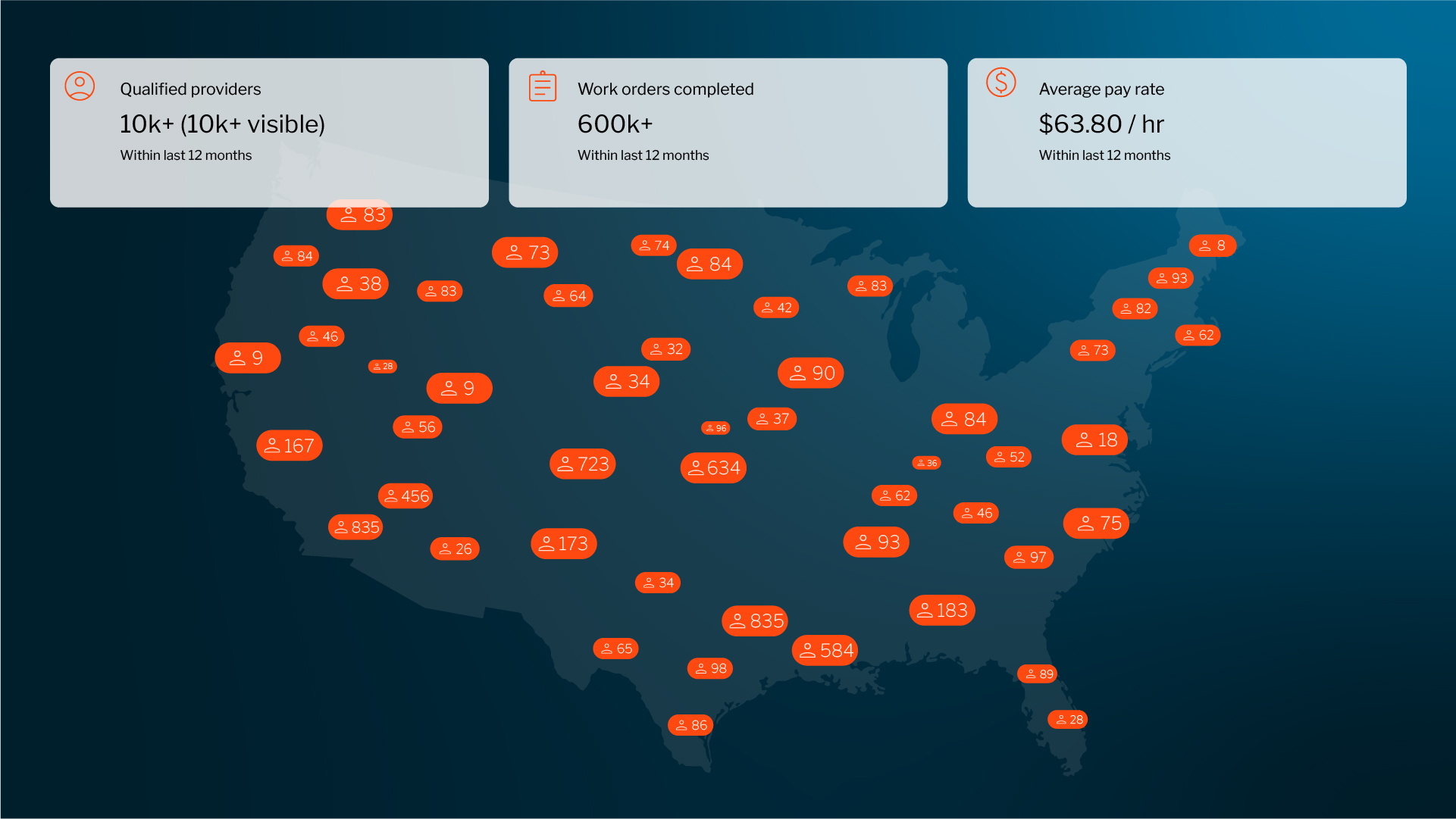
On Field Nation:
Field Nation users can leverage MarketSmart™ Insights to access marketplace pricing and coverage data to inform their planning.
Design for quality
The first step to achieving quality results is defining what good execution means for your organization. Establish technician requirements based on the work, which might include skills, relevant licenses or certifications, work history, location, experience, and previous performance.
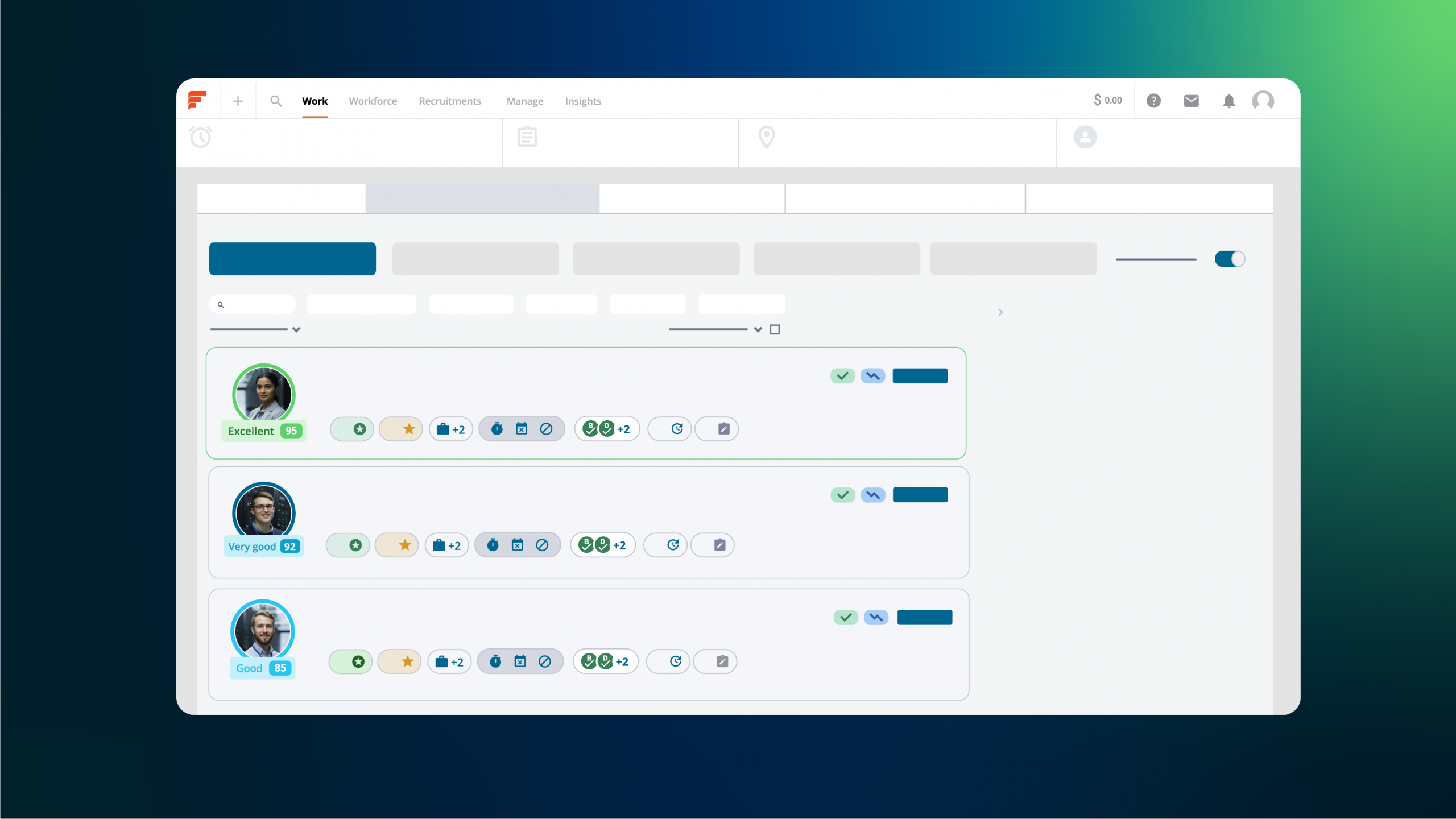
On Field Nation: Field service leaders can use Provider Match to review relevant technician information, including work history, qualifications, ratings, and performance signals, when evaluating technicians against their requirements. Provider Success Score (PSS) brings multiple performance signals into a single score to provide additional context for selection, while Talent Pools let companies organize preferred technicians for future work.
Make the program repeatable
The next question is how work should move through the program. Start with intake: identify where work originates and how it needs to flow into the program. Consider how the process should connect with your existing field service systems and workflows.
From there, establish routing and assignment rules. Determine which criteria should inform where work goes, where automation makes sense, and where someone inside the organization should review a decision. Criteria might include skills, location, cost, performance, preferred technicians, or other program-specific requirements.
Next, carry those standards into execution. Work orders should clearly communicate what needs to happen, what documentation is required, what constitutes completion, and what information should be captured.
Finally, plan for the exceptions. Not every work order will follow the standard path. Define which situations can be handled through established rules and which require review or escalation.
On Field Nation: The platform can connect with existing systems and workflows to help coordinate work from intake through assignment and execution. Capabilities such as Smart Dispatch can automate assignment based on predefined program requirements, while keeping your team involved where review or intervention is needed.
Phase 3: Launch, learn, and scale
A program doesn’t need to start everywhere at once. A focused launch gives you an opportunity to put your design into practice, learn from actual execution, and improve before expanding.
Start with the right use case
Choose an initial use case where the role of on-demand labor is clear, work requirements are defined, desired outcomes are measurable, and ownership is established. That might be a repeatable break/fix need, a defined project, a coverage gap, or another area where the organization can evaluate the model against a clear objective.
Use what you learn from that initial execution to inform what comes next. Expansion should be deliberate, not an attempt to move every type of field service work into the program at once.
Establish the operating model
Before work begins, make sure everyone knows how the program will operate.
Confirm who owns the program day to day, who handles escalations, who provides executive sponsorship, and what responsibilities sit with participating teams. Establish the standard process, but also define when internal intervention is needed. Clear exception and escalation paths help teams respond when work doesn’t go according to plan without redesigning the process each time.
Finally, create a regular operating cadence for reviewing the program and making decisions. Field Nation can complement internal resources with implementation, strategic, and operational support where needed as companies put their programs into practice and scale.
Learn from the work
Once the program is running, its results should inform what happens next. Monitor the measures that matter to the program, such as response, fulfillment, quality, cost, and coverage. Then use those results to refine decisions about technician selection, preferred technician groups, pricing, coverage, routing, standards, workflows, and exception rules.
This creates a feedback loop: execution produces information, and that information helps improve future decisions. XTIUM put this approach into practice by using preferred technician groups and assignment rules as its on-demand labor program scaled, achieving a 97% first-time-fix resolution rate with zero quality escalations.
On Field Nation: Performance Intelligence brings together signals generated by a field service program across response, fulfillment, quality, cost, and coverage. It can help companies evaluate performance, benchmark against comparable programs, and use those insights to inform future decisions.
 1. LAUNCH Launch with a focused use caseStart with work that has clear requirements, measurable outcomes, and established ownership. |
 2. LEARN Learn from executionReview performance across quality, fulfillment, cost, response, and coverage. Identify where standards, workflows, or decisions need to change. |
 3. STRENGTHEN Strengthen the programRefine technician selection, preferred technician groups, pricing, routing, workflows, and exception rules based on what you learn. |
 4. SCALE Scale deliberatelyApply the stronger model to additional work types, geographies, customers, or use cases. |
Build capacity around your standards
On-demand labor is most effective when it isn’t treated as an isolated source of technicians. It should have a defined role within your labor strategy and operate against standards that reflect how your organization wants work delivered.
Start with the outcome, decide where on-demand labor fits, and then define the work, technician requirements, workflows, and measures that matter. Finally, put the program into practice, learn from the results, and refine it as you grow.
Your standards remain the foundation throughout. The Field Nation platform connects access to a nationwide labor marketplace with program rules, work coordination, automation, and performance intelligence to help turn those standards into repeatable operations.