Read time: 4 minutes

The U.S. banking industry is undergoing a physical transformation. Since 2012, banks have closed nearly 15,000 net branches as customers shift to mobile and online banking. But the story is not as simple as “branches are going away.” The pace of closures is slowing, major banks are actively opening new locations, and the locations that survive are investing heavily in technology.
Bank branch counts are declining overall, but the picture is more nuanced than the headlines suggest. New branch openings have held steady at roughly 1,000 to 1,100 per year for the past seven years, nearly offsetting closures.
Some of the largest banks are growing aggressively. For example, JPMorgan Chase announced plans to open more than 160 branches in over 30 states in 2026 and renovate nearly 600 existing locations.
On the other hand, U.S. Bank and Wells Fargo closed 180 branches in 2025. Regional and community banks continue to consolidate where foot traffic no longer supports a full-service location.
Banks are shifting toward remote services and digitized consumer experiences, reconfiguring branches around technology rather than teller lines.
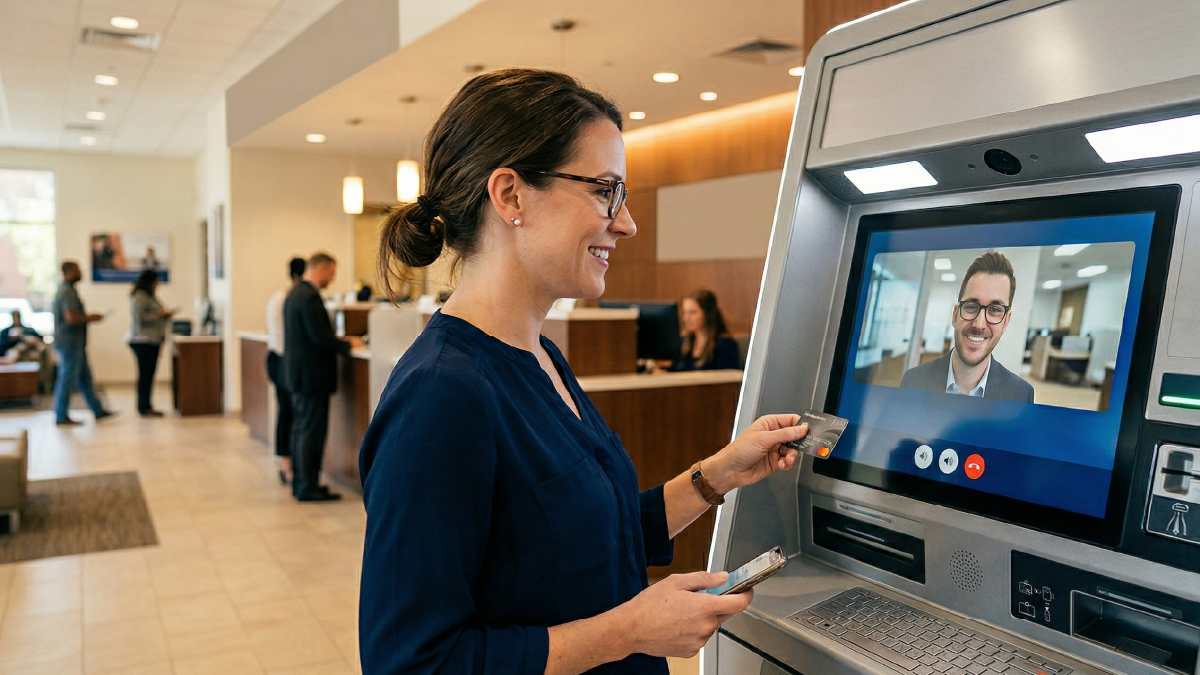
As routine transactions move online, the visits that remain involve more complex needs like account openings, loan consultations, and financial planning. Banks are responding by creating dedicated technology zones that include interactive teller machines (ITMs), video banking stations, self-service kiosks, and digital signage.
ITMs are a good example of how quickly this shift is happening. They combine traditional ATM functions with live or remote teller assistance through video and audio, allowing customers to complete complex transactions without waiting for a staffed window.
Digital signage is also gaining ground. Banks are using screens for wayfinding, product promotion, queue management, and real-time financial information. These installations require not just the screens themselves but networking, content management systems, and ongoing maintenance.
ATMs are no longer just cash dispensers. As more banking activity shifts online, ATMs are taking on tasks that tellers used to handle. As a result, the machines themselves are becoming significantly more complex.
Two technology shifts are behind much of the upgrade activity.
First, cardless transactions are becoming standard. Banks are retrofitting ATMs with NFC readers and QR code access to support mobile wallet withdrawals, while the magnetic stripe cards are phasing out. Second, AI-powered predictive maintenance is gaining traction, with machines that can identify mechanical issues and trigger service calls before failures occur.
Field Nation marketplace data reflects this momentum. ATM-related work on the Field Nation marketplace grew 15% year over year as financial institutions began upgrading to support contactless access, cash recycling, and expanded self-service capabilities.
ATM field service work now spans hardware installation, software updates, peripheral retrofits, cash recycling module upgrades, and preventive maintenance.
Financial industry transformation creates demand across several of the fastest-growing work categories on the Field Nation marketplace. This growth spans several industries, but the banking applications are clear.
Networking work grew 12.2% year over year. In banking, this growth is driven by the connectivity backbone required for ITMs, video banking, digital signage, and smart ATMs. Wireless upgrades are particularly relevant as banks separate customer-facing networks from operational infrastructure.
AV and digital signage work grew 3.3% as banks add video walls, interactive displays, and video conferencing to reconfigured branches.
Cabling work grew 8.3%, supporting the physical infrastructure behind branch renovations and new builds.
Kiosk-related work grew by 6.7% as banks added self-service check-in, account-opening, and transaction terminals.
For field service companies already working in retail and hospitality, banking offers familiar opportunities in an industry where investment is accelerating.
For a complete look at the technologies, verticals, and workforce strategies shaping field service in 2026, explore our Definitive Guide to Field Service Trends.