Read time: 5 minutes


Not all field service categories are growing at the same pace. Ten work categories on the Field Nation marketplace are experiencing double-digit growth as organizations focus spending on technologies that deliver operational efficiency and profitable growth.
In our recent webinar, Wael Mohammed, EVP of Strategy at Field Nation, shared where demand is concentrated and what’s driving it. Here are the categories showing the strongest momentum.
Retail POS refreshes came back in 2025 after retailers held tight on spending through 2024. Retailers are replacing pandemic-era terminals, card readers, and pin pads with models that support contactless payments using near-field communication (NFC). Self-checkout installations are accelerating as retailers optimize checkout efficiency.
The result: point-of-sale work on the Field Nation marketplace grew 16.3% year over year in 2025, and that momentum is expected to continue through 2026.
Retailers are deploying mobile POS to eliminate checkout bottlenecks and meet customers wherever they are—on the sales floor, in the parking lot for curbside pickup, or at pop-up locations. Convenience stores, specialty retailers, and boutique formats are using handheld devices to speed transactions and reduce queue times.
Quick-serve restaurants are also major adopters, using mobile devices to speed throughput at the window, at the table, or during curbside pickup.
Room-in-a-box solutions continue growing as hybrid work becomes permanent. These standardized AV setups include a camera, a display, a microphone, speakers, and a control panel, all pre-configured and ready to install. Two technicians can complete installation in under four hours without custom integration.
The commercialization of these packages makes video conferencing infrastructure economically viable at scale. Organizations need consistent meeting spaces across locations, and room-in-a-box delivers that without traditional cost and complexity.
LED video walls became more accessible in 2025 as fine-pitch technology prices dropped, making displays viable for corporate lobbies, commercial spaces, and smaller venues. According to Persistence Market Research, the global market hit $6.85 billion in 2025 and is projected to reach $15 billion by 2032.
Retailers dominate installations at 37% of the market, using LED for branding, product displays, and digital signage. Corporate offices deploy them in lobbies and conference rooms. Indoor installations account for 63% of the market as organizations prioritize high-resolution displays for customer engagement and employee communication. These large-format installations require specialized expertise, driving demand for skilled technicians.
Retailers are deploying sensors and IoT devices for real-time inventory tracking and operational automation. Walmart is rolling out millions of battery-free IoT sensors across 4,600 U.S. stores by the end of 2026, tracking 90 million pallets of inventory. Smart shelves with RFID tags and weight sensors detect stock levels and trigger automatic reordering.
QSRs use sensors in drive-thrus for customer detection. Hotels deploy robot fleets with navigation sensors for room service. Banks install cardless ATMs with biometric sensors. Installation, configuration, and ongoing maintenance of these connected devices creates steady field service work as organizations automate operations and feed AI systems with real-time data.
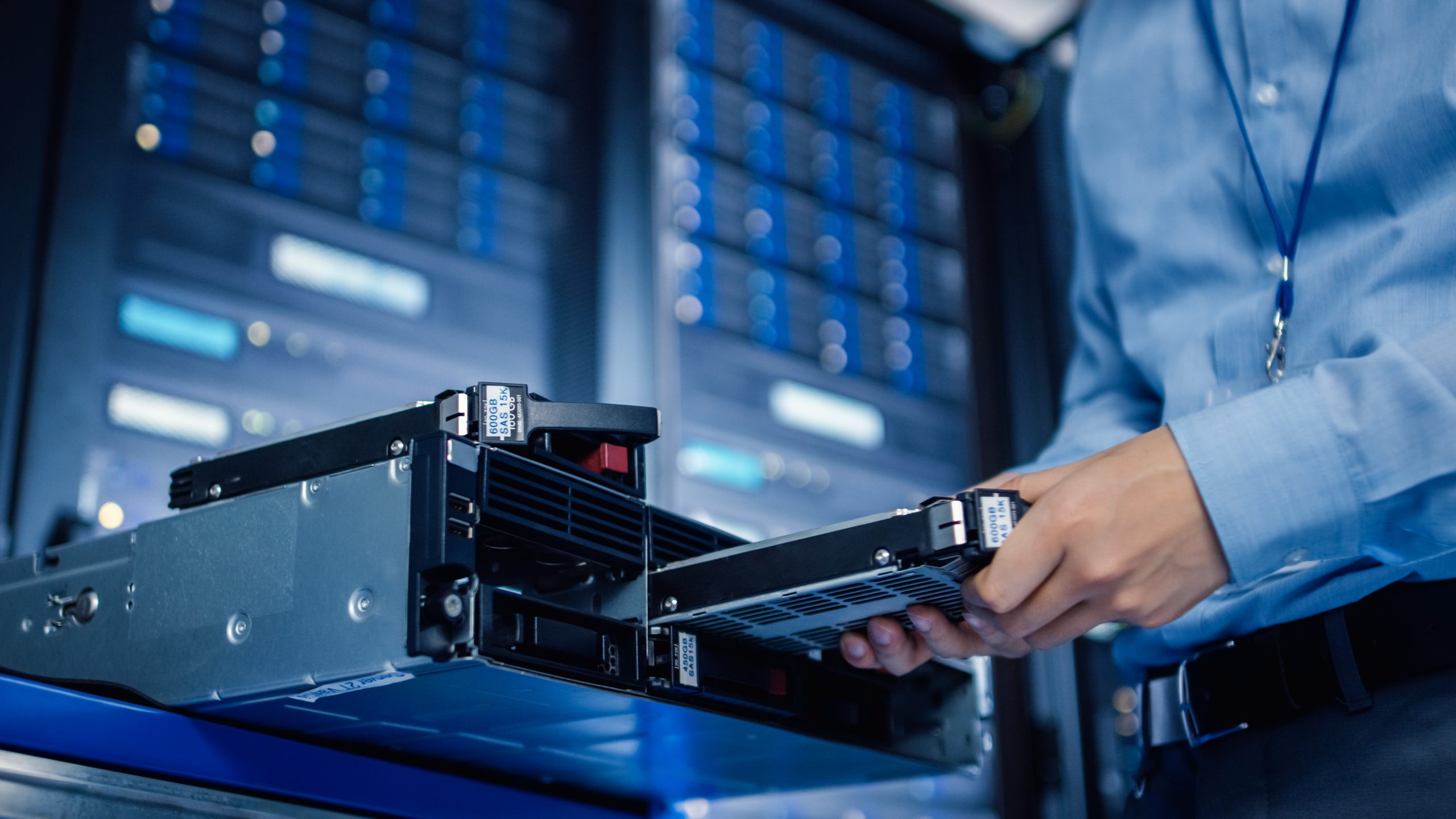
Data center work on the Field Nation marketplace grew 18.3% year over year in 2025. The industry is projected to maintain double-digit compound annual growth rates through 2030 and beyond.
Growth is driven by new data center construction, but field service work is primarily chip upgrades to hyper-performance processors, capacity expansion for storage, fiber cabling and testing, backplaning, maintenance, and hot swaps. This creates sustained field service demand as technicians travel to customer sites for equipment swaps and infrastructure work.
Networking work on the Field Nation marketplace grew 12.2% year over year. Wireless infrastructure is ubiquitous, and upgrades are continuous as organizations switch to Wi-Fi 7.
But the bigger story is that every type of field service work requires robust wireless infrastructure. Kiosks, security systems, robots, analytics, mobile POS, and real-time inventory all rely on it. Because so many systems depend on wireless, QSRs, hotels, and retailers run separate high-bandwidth networks for operations and guest connectivity.
That demand translates into cable runs, power-over-Ethernet installations, access point upgrades, and wireless site surveys.
Security technology is evolving beyond traditional surveillance. Retailers report a 93% increase in shoplifting incidents, according to the NRF.
IP cameras now use AI to track shopping patterns and provide analytics on customer behavior alongside loss prevention. Retailers are upgrading to these intelligent systems, which require installing new cameras, power-over-Ethernet cabling, and robust wireless infrastructure to handle data processing and analytics. As a result, CCTV and alarm system work on the Field Nation marketplace grew 10.5% year over year.
Interactive kiosks are essential in smaller formats where self-service creates efficiency. QSRs use them for ordering. Retailers use them for product information and checkout. Hotels use them for check-in.
Kiosks deliver the convenience customers expect while reducing labor costs. The demand is reflected in our data: kiosk work on the Field Nation marketplace grew 6.7% year over year. Growth is expected to continue as the digitalization of physical spaces accelerates.
POTS lines are being replaced with IP-based voice services, including VoIP, SIP trunking, fixed wireless, and LTE or 5G adapters. Regulators extended timelines for retiring legacy copper networks into 2029, creating a multi-year upgrade cycle. Many organizations still have migrations ahead.
POTS work volume remains consistent as businesses transition to these platforms. Demand is expected to persist through the end of the decade as legacy infrastructure is phased out.
These ten categories represent concentrated demand in 2026. Success requires taking a granular view of where investment is happening, building capabilities in high-growth areas, and staying close to your customers’ project pipelines.
Want the full analysis? Watch our webinar recording or explore The Definitive Guide to Field Service Trends in 2026.