Summary
Quick-serve restaurants are rapidly expanding in 2026, investing in kiosks, AI drive-thru tech, networking, and store upgrades. Discover why QSR growth is creating major installation and maintenance opportunities for field service providers.
Quick-serve restaurants (QSRs) are in the middle of a technology overhaul. Drive-thru and delivery now account for 70% of QSR revenue, and brands are investing heavily to compete on speed, accuracy, and personalization. The investment spans self-service kiosks, AI voice ordering, digital menu boards, cameras, networking upgrades, and more.
For field service organizations, this trend translates into growing demand for installations, upgrades, and maintenance across a large and expanding footprint.
Here’s what’s driving the QSR opportunity.
There are more than 212,000 QSR locations in the U.S., and many QSR chains are opening aggressively in 2026. McDonald’s is adding 900 U.S. locations by 2027. Coffee and fast-casual brands are also scaling nationwide: 7Brew is opening 400 locations, Chipotle 350, Jersey Mike’s 300, Wingstop 250, and Dutch Bros 175.
Even brands closing underperforming locations are investing in their stores. Starbucks is closing roughly 400 locations as part of a $1 billion restructuring, while also remodeling 1,000 stores and shifting toward suburban drive-thrus. Denny’s, Wendy’s, Burger King, and others are trimming their footprints while focusing on smaller, more efficient formats.
Whether expanding or consolidating, brands are investing in technology. New locations need deployments. Existing locations need retrofits and refreshes.
The technology stack is expanding
QSRs are deploying a range of technologies that require skilled field service support.
Kiosks are leading the way. According to a recent industry report, 80% of QSRs have implemented self-service kiosks, primarily to address labor challenges.
AI voice ordering is expanding at the drive-thru. Wendy’s plans to deploy its FreshAI system to 500-600 locations, and Taco Bell has rolled out voice AI to more than 500 drive-thrus. Both chains report improved efficiency and higher average checks.
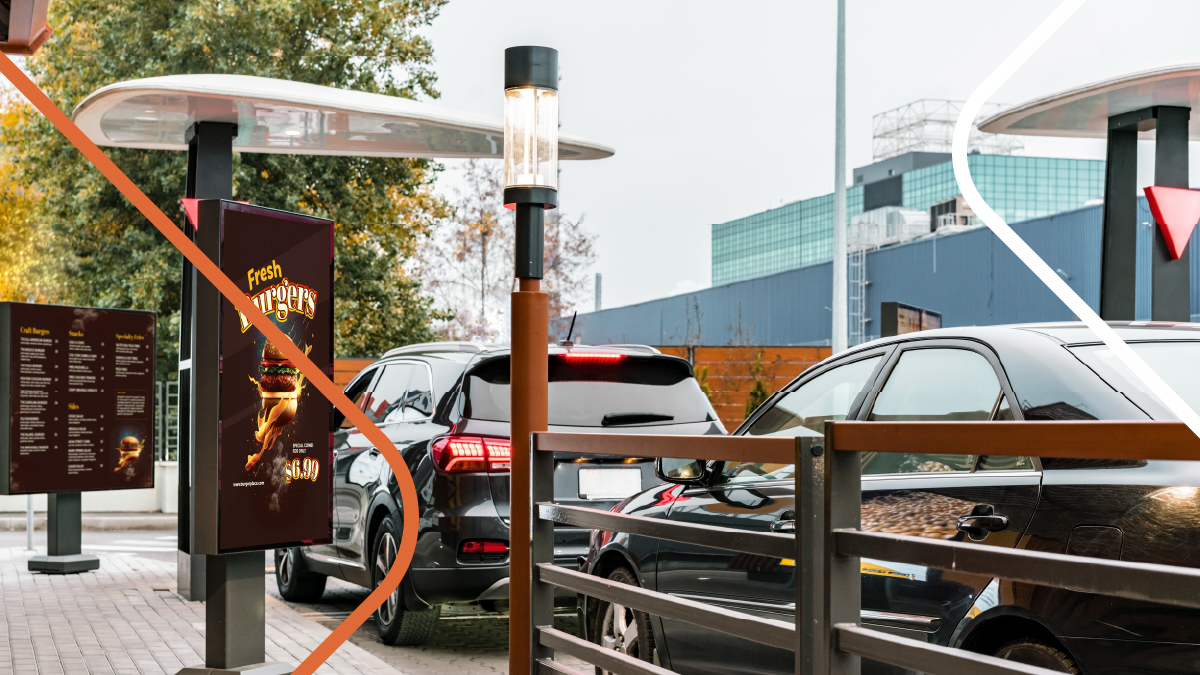
Digital menu boards, sensors, and cameras are becoming standard in drive-thru lanes. Brands are using them to personalize offers, track wait times, and improve order accuracy.
Networking and connectivity requirements are increasing as stores add more connected devices. Wireless upgrades, private 5G, and edge computing are all part of the technology roadmap.
This is all driven by a labor challenge that isn’t going away. Over 60% of QSR leaders say labor is their most pressing challenge, prompting brands to turn to automation and self-service.
The field service opportunity
The technology investment is showing up in field service demand. On the Field Nation marketplace, related work categories are all growing:
- POS: up 16.3% year over year
- Networking: up 12.2% year over year
- CCTV and alarm systems: up 10.5% year over year
- Cabling: up 8.3% year over year
- Kiosk: up 6.7% year over year
The work spans POS installations, networking infrastructure, low-voltage cabling, kiosk installations, digital signage, security camera installations, and edge computing infrastructure.
Skills that transfer
The skills already in demand for retail apply directly to QSRs. Technicians working on networking, POS, cabling, kiosks, and security will find familiar work. And the profile is similar: high location counts, standardized technology, and recurring upgrade cycles.
QSR brands are also consolidating their technology stacks, moving from multiple disconnected systems to unified platforms. According to the State of Digital Restaurant Report, 64% of enterprise restaurants plan to upgrade to unified systems that centralize data and improve operating efficiencies.
Nearly 70% of enterprise restaurants report that order accuracy is their biggest efficiency challenge, followed by speed of service and staff productivity. That’s driving continued investment in kitchen technology, connected systems, and the field service work required to install and maintain them.
What QSR investment means for field service
QSR brands are spending to compete, and that spending is creating work in 2026. The footprint is large, the technology is expanding, and the upgrade cycles are just getting started. Learn more about the trends making an impact on field service in our 2026 Definitive Guide to Field Service Trends.